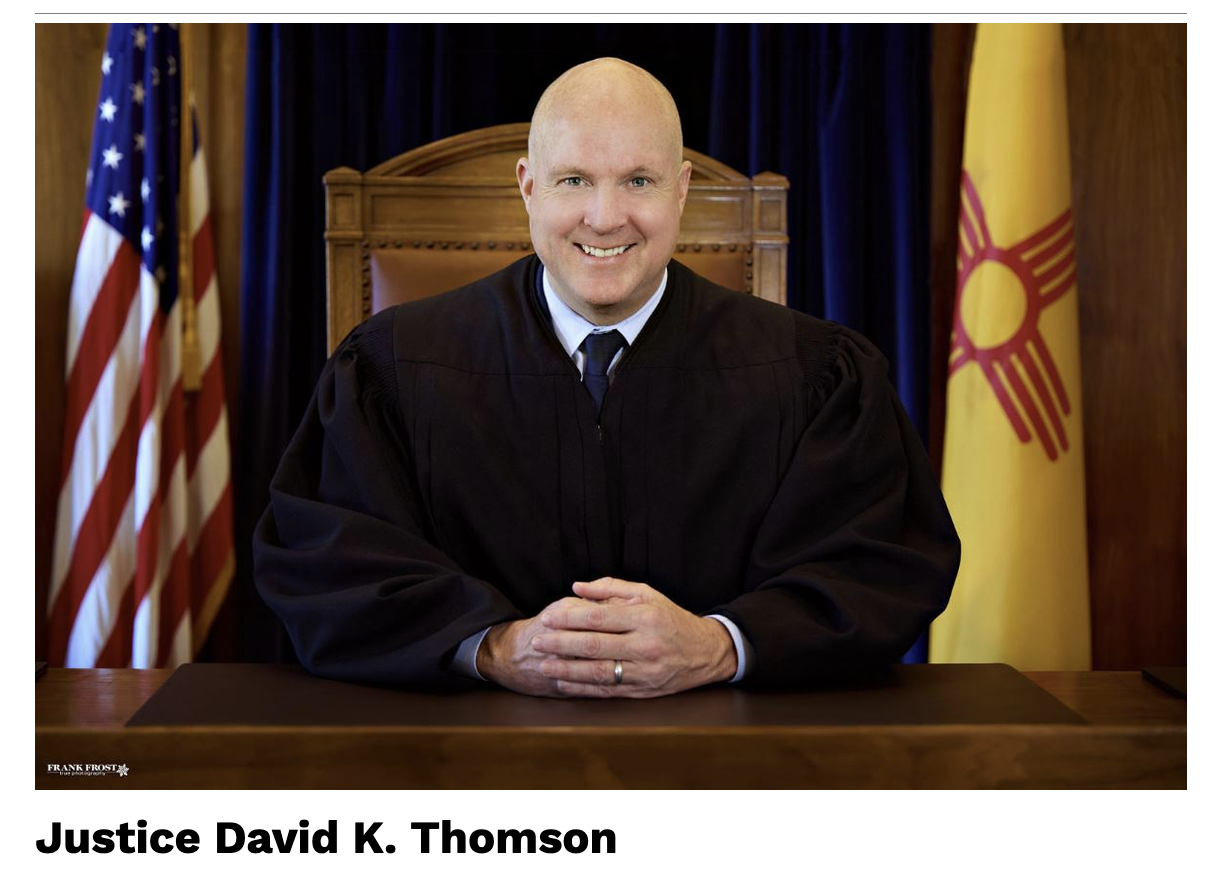
Supreme Court Justice lacked critical legal knowledge as a trial court judge. This lack of knowledge has clouded at least one title in the land records yet this justice seeks retention on the highest court in New Mexico
Oct 16, 2026
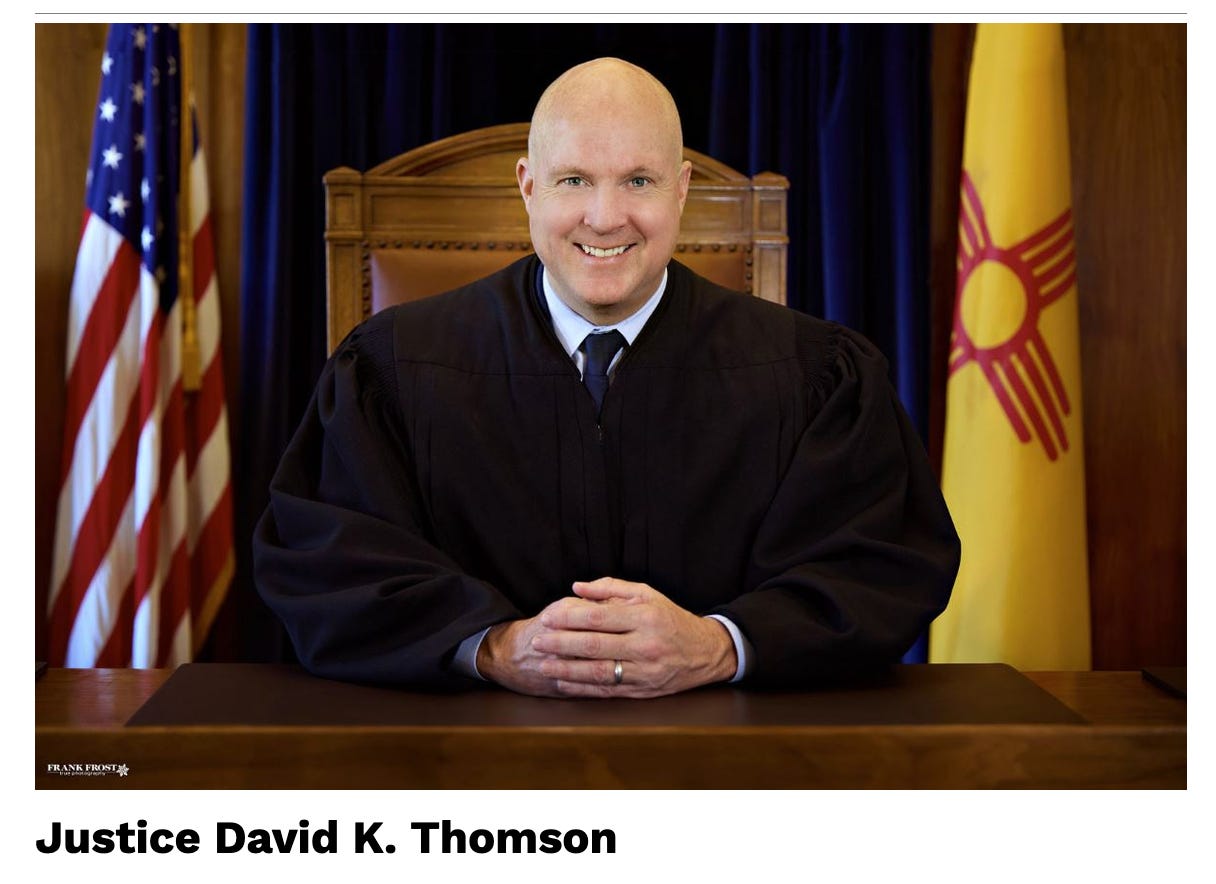
This is the first in a series of articles regarding the foreclosure case BOKF, N.A. v. Pacheco, D-101-CV-2014-02644, the subsequent Court of Appeals opinions (2021-NMCA-010, now vacated and unpublished and A-1-CA-39814, now vacated) and the final Supreme Court case, Kaushal v. Santa Fe Comty. Housing Trust, 2025-NMSC-029. I will use this case to highlight the serious failures in our judiciary. This is important, as it relates to foreclosures and the apparent lack of knowledge of the law by many in the legal industry, including the judiciary. For the purpose of this article I must give a preface. I felt it was necessary to put this out there before the November 3rd elections. Hopefully it will reach voters, as Justice Thomson will be on the ballot for retention. It is a serious issue, in and of itself that citizens “elect” or “re-elect” judges in this way. But that is a discussion for another day.
New Mexico Supreme Court Justice David K. Thomson Is Seeking Retention
Before voters decide whether he should remain on the Court, they should examine a foreclosure case he handled as a district judge in Santa Fe County. The record in BOKF, N.A. v. Unknown Heirs of Pacheco shows that the Supreme Court later found that a judgment Thomson entered in 2017 might be potentially void for failure to account for basic rules of title and due process. That judgment has clouded the title to a single property for years. The same legal error, if repeated in other cases, would affect far more.
In December 2014, BOKF filed a foreclosure action against Linora P. Pacheco and the junior lienholders on her Santa Fe home. Pacheco died in September 2015, while the case was pending. By that point the plaintiff already knew the identity and location of at least two of her sons, Raymond and Bryan Pacheco, both of whom lived at the property. The plaintiff amended its complaint after a suggestion of death was filed. It named “Unknown Heirs, Devisees or Legatees of Linora P. Pacheco” under NMSA 1978, § 39-5-15 and added one additional person. It did not name Raymond or Bryan as defendants. Raymond received service only in his capacity “as the Unknown Heir.”
No motion for publication supported by a diligent-search affidavit was ever filed after the amendment. Judge Thomson entered a stipulated and default judgment in rem in June 2017. The property was sold at foreclosure later that year.
New Mexico Law Was Not Ambiguous On The Central Points
Under the Probate Code, NMSA 1978, § 45-3-101(B)(3), title to real property passes to the decedent’s heirs by operation of law at the moment of death. That interest is superior to a mortgage lien. A foreclosure judgment cannot extinguish it unless the heirs who hold title are properly named and served. Known heirs must be named individually. The statutory device that permits a plaintiff to proceed against “unknown heirs” requires a documented good-faith search and an affidavit before judgment. None of those steps occurred here.
After the sale, litigation shifted to competing claims for statutory redemption. In 2018 Judge Thomson rejected an assignee’s redemption petition in part because, in his view, the assigning heirs had never established “legal ownership” of the property. That order treated the heirs as if they did not already hold title under the Probate Code. The Court of Appeals reversed on redemption and cotenancy grounds in 2021, but it too treated the underlying judgment and sale as valid. On remand, a successor judge awarded a junior lienholder a fractional ownership interest. The Court of Appeals reversed again in 2023, still without examining whether the judgment that produced the sale had ever been effective against the true title holders.
Only in 2025 did the Supreme Court Address The Threshold Problem
In Kaushal v. Santa Fe Community Housing Trust, 2025-NMSC-029, the Court raised the service and title issues on its own motion. It stated that legal title passed to the heirs at death and was superior to the mortgagee’s lien and that known heirs had not been named or properly served. Importantly, it stated that the judgment “may be void” as to those heirs for lack of personal jurisdiction and due process. It vacated both prior Court of Appeals opinions and remanded for fact-finding on the validity of the 2017 judgment. Until that determination is made, the title remains clouded by a judgment that has already been treated as conclusive for years.
The practical effect is straightforward. A property that should have remained subject to the heirs’ superior title was sold. Subsequent claims were litigated for years, on the strength of a judgment entered without the required joinder and service. The heirs who held that title never appeared. The only parties actively contesting the outcome after the sale were attorneys representing an assignee of two heirs’ redemption rights and a junior lienholder. In foreclosure cases, homeowners and their families are frequently unrepresented. Issues that depend on knowledge of both the Probate Code’s title-transfer rule and the due-process limits on “unknown heirs” practice will often go unraised when the only counsel before the court are those representing the plaintiff and later claimants.
Justice Thomson Presided Over Many Foreclosure Cases as a District Judge
This record does not establish how often deceased mortgagors were involved or whether the same defects in naming and service occurred in those cases. It does establish that, in at least one case that reached judgment under his authority, the governing rules on title and notice were not applied. This resulted in lasting consequences for the land records. This author intends to examine additional dockets to determine whether similar problems appear elsewhere.
Retention elections exist so that voters can assess whether a justice has demonstrated the legal competence and care the office requires. The Pacheco record shows a judgment later identified by the Supreme Court as potentially void for failure to apply settled rules of property and procedure. It was followed by years of secondary litigation that never corrected the foundational error. That is a sufficient basis for voters to conclude that Justice Thomson should not be retained.